Welcome: luyichemi
Language:
 ∷
∷

∷
 ∷
∷
As environmental regulations tighten and cost-control demands rise, traditional aluminum sulfate is being phased out for its limited adaptability and high operational costs. Polyaluminum Chloride (PAC), a high-molecular flocculant, has emerged as the leading solution for municipal, industrial and drinking water treatment.
PAC boasts overwhelming strengths over aluminum sulfate:
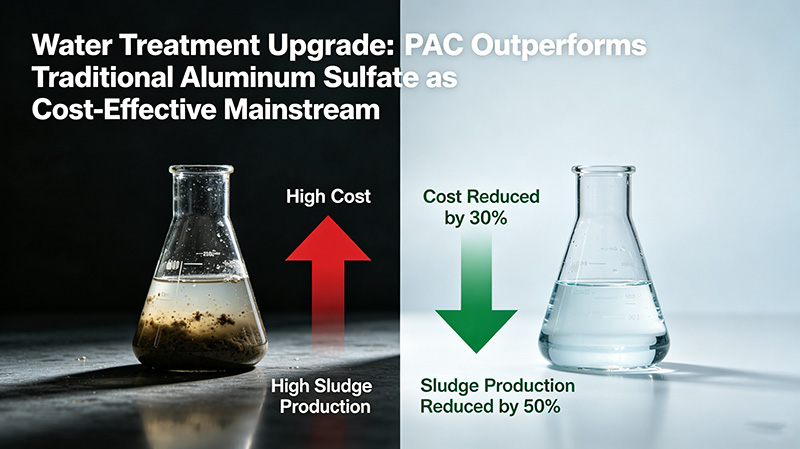
Lower dosage & costs: With higher flocculation efficiency, PAC dosage is just 1/3–1/2 of aluminum sulfate, cutting overall treatment costs by 15%–30%.
Broader pH adaptability: It works stably at pH 5.0–9.0, resisting pH fluctuations and simplifying operation.
Excellent low-temperature performance: It maintains strong flocculation at 5–10°C, while aluminum sulfate loses efficacy and produces poorly settling flocs in cold conditions.
Less sludge output: Complete reaction generates 30%–50% less sludge, lowering disposal costs and environmental impact.
Superior purification: PAC effectively removes suspended solids, colloids, phosphorus, fluorine and heavy metals like lead and cadmium, delivering more stable effluent meeting strict environmental standards.
Industry insiders note that efficient, economical and versatile PAC will continue replacing traditional aluminum sulfate, with its market presence expanding steadily.
Contact: Victoria Zhang
whatsapp:
 Victoria Zhang
Phone: +86 19026809880
Tel: +86 19026809880
Email: info@luyichemi.com
Add: Qingdao , Shandong, China